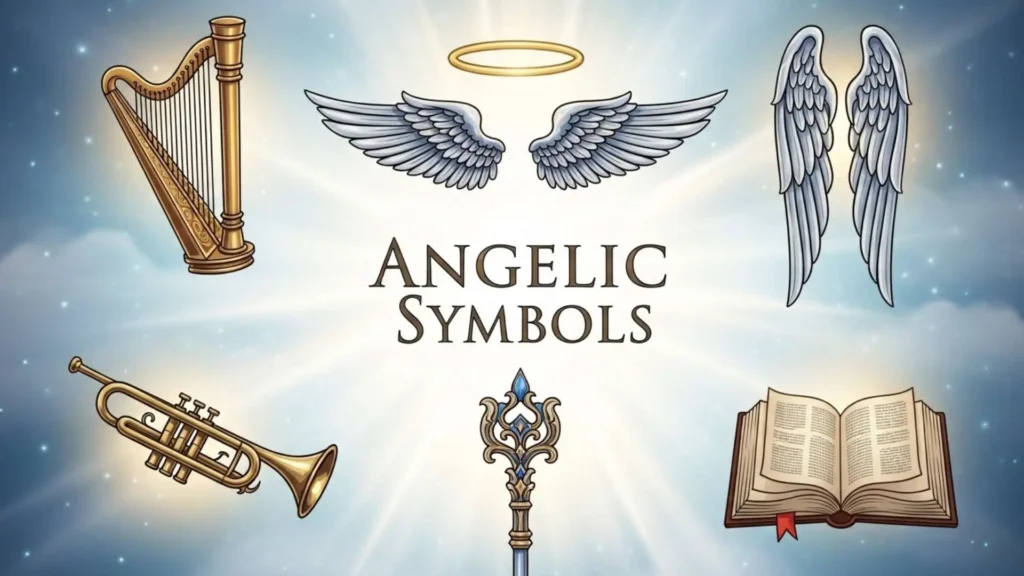
“Angelic Symbols” have whispered hope, protection and mystery into human hearts since the dawn of civilization.
From ancient temples to modern tattoos, these sacred signs carry messages that feel deeply personal yet universally familiar.
They matter because they sit at the crossroads of faith, psychology, and culture, shaping how humans understand goodness, fear, destiny, and the unseen.
This article invites you into layers of meaning that most people sense but rarely fully understand.
What Are Angelic Symbols?
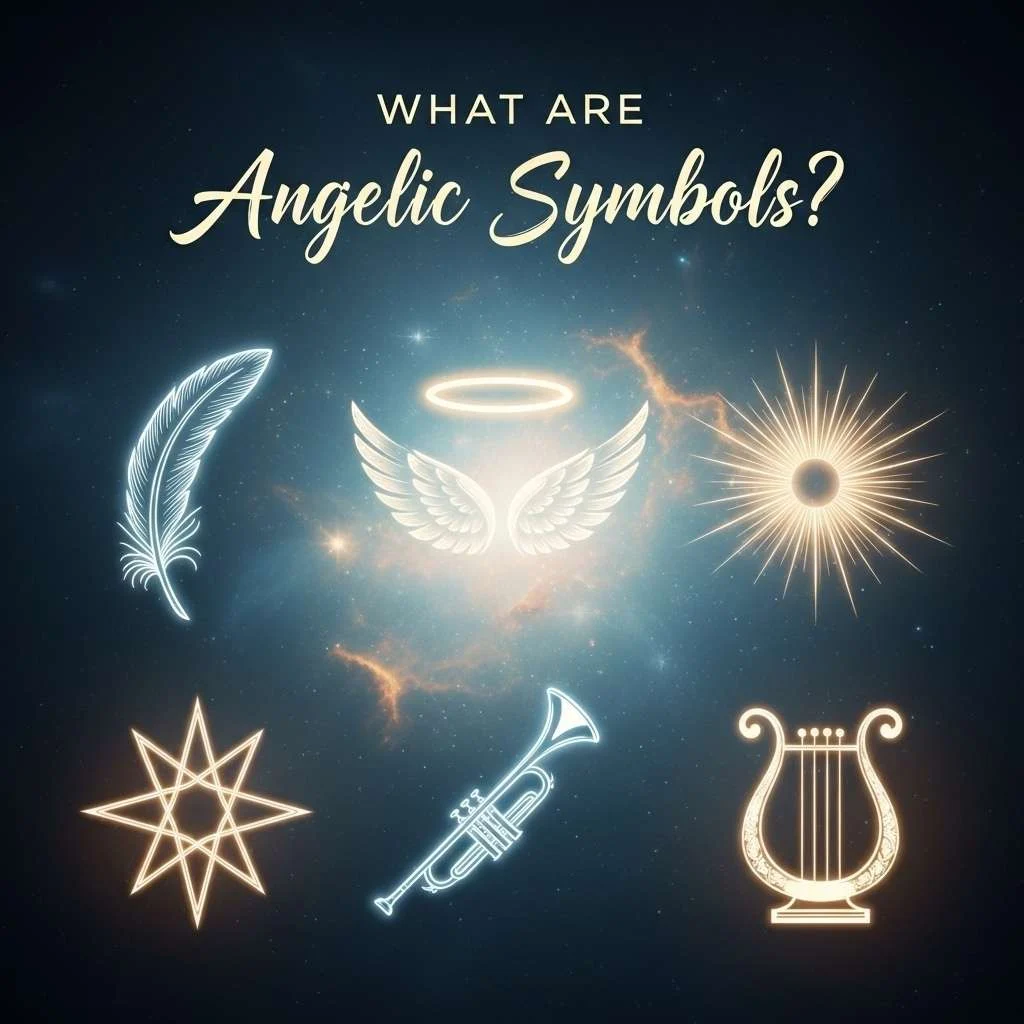
Angelic symbols are visual signs, shapes, or images believed to represent angels, divine messages, or heavenly forces. Across history, people have used them to communicate with the sacred, seek protection, or express faith in a higher order.
Historically, angelic symbols appear in ancient Mesopotamian carvings, Hebrew mysticism, early Christian manuscripts, Islamic art, and Renaissance paintings. Each culture shaped these symbols through its own spiritual lens, yet a shared belief connects them. Angels act as messengers between the divine and humanity. Their symbols became a language for expressing hope, warning, guidance, and moral order in a chaotic world.
Deep Symbolic Meaning of Angelic Symbols
Spiritual Meaning
On a spiritual level, angelic symbols represent divine presence, protection, and guidance. Many believers feel these symbols act like signposts, reminders that they are not alone during moments of fear or uncertainty. A single symbol can feel like reassurance from beyond the physical world.
Psychological Meaning
Psychologically, angelic symbols tap into the human need for safety and meaning. Carl Jung described similar imagery as archetypes rooted in the collective unconscious. When people see angelic symbols, they often feel comforted because the mind associates them with guardianship, purity, and unconditional care.
Cultural Meaning
Culturally, angelic symbols shape moral values. They reinforce ideas of good versus evil, justice, sacrifice, and compassion. Stories, rituals, and art pass these meanings from generation to generation, embedding them deeply into collective identity.
Types and Variations of Angelic Symbols
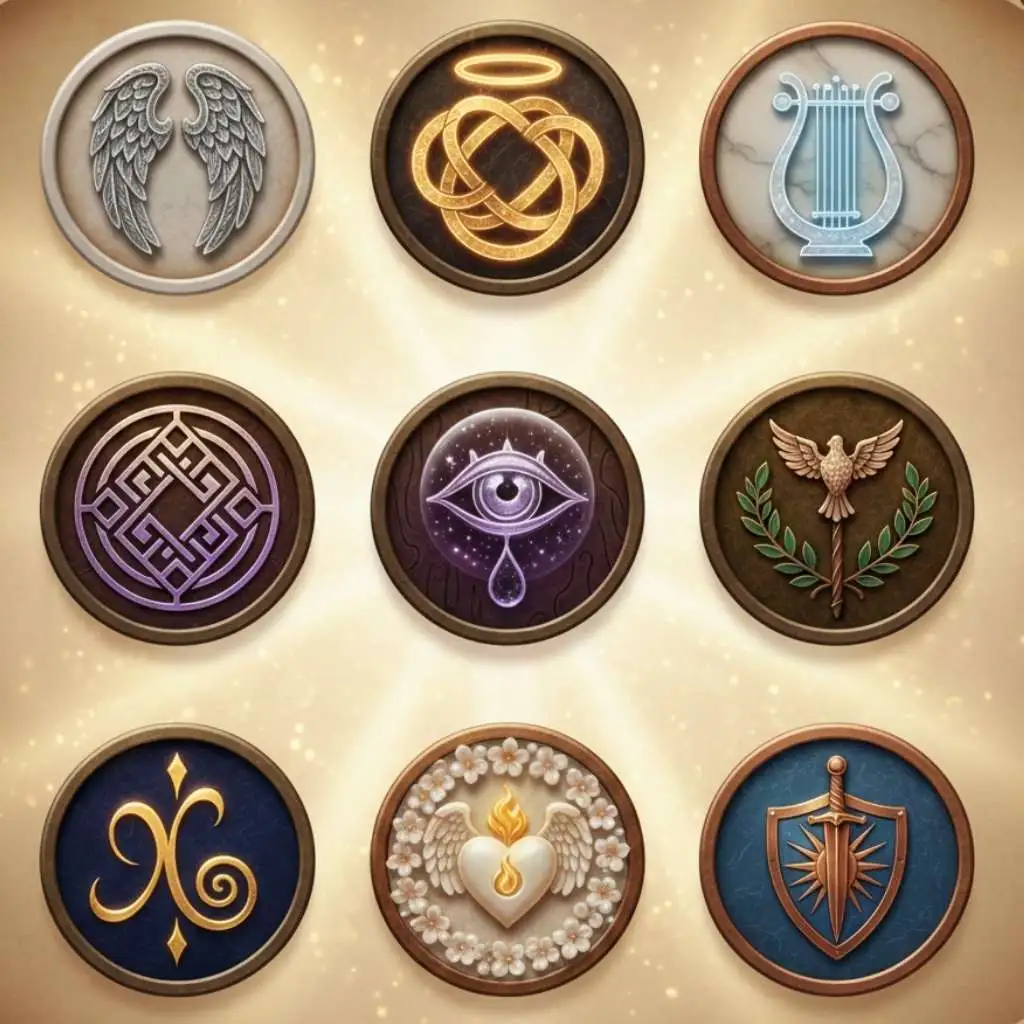
Angel Wings
Visual description: Large feathered wings, often white or golden
Meaning: Freedom, protection, divine presence
Where it appears: Religious art, tattoos, dreams, fashion, memorials
Halo
Visual description: A glowing circle above the head
Meaning: Holiness, enlightenment, divine favor
Where it appears: Christian art, icons, paintings, illustrations
Trumpet
Visual description: An angel holding a long horn
Meaning: Divine announcement, awakening, judgment
Where it appears: Biblical art, medieval manuscripts, apocalypse imagery
Eye of God
Visual description: A single eye surrounded by light or wings
Meaning: Divine watchfulness, omniscience
Where it appears: Sacred geometry, architecture, spiritual art
Angel Numbers
Visual description: Repeating number patterns like 111 or 444
Meaning: Guidance, alignment, reassurance
Where it appears: Modern spirituality, numerology, daily life experiences
Angelic Symbols Across Cultures
In ancient Mesopotamia, winged beings symbolized protection and royal authority. Egyptian culture depicted winged deities as guardians of souls in the afterlife. In Judaism, angelic symbols appear in Kabbalah as complex spiritual forces connected to divine wisdom.
Christian traditions emphasize halos, wings, and trumpets as symbols of purity and divine communication. Islamic art avoids direct angel imagery but uses light and calligraphy to represent angelic presence. In modern culture, angelic symbols often blend spirituality with personal expression, especially in tattoos and jewelry.
Angelic Symbols in Art, Movies and Pop Culture
Artists from Michelangelo to William Blake used angelic symbols to express transcendence and inner struggle. In movies, angels often symbolize hope, redemption, or moral conflict. Films portray them as guides who challenge human choices rather than simply reward goodness.
In tattoos, angelic symbols often honor lost loved ones or represent personal transformation. Fashion incorporates wings and halos as metaphors for freedom and rebellion. Books and graphic novels reimagine angels as complex beings navigating human emotions.
Spiritual and Dream Meaning of Angelic Symbols
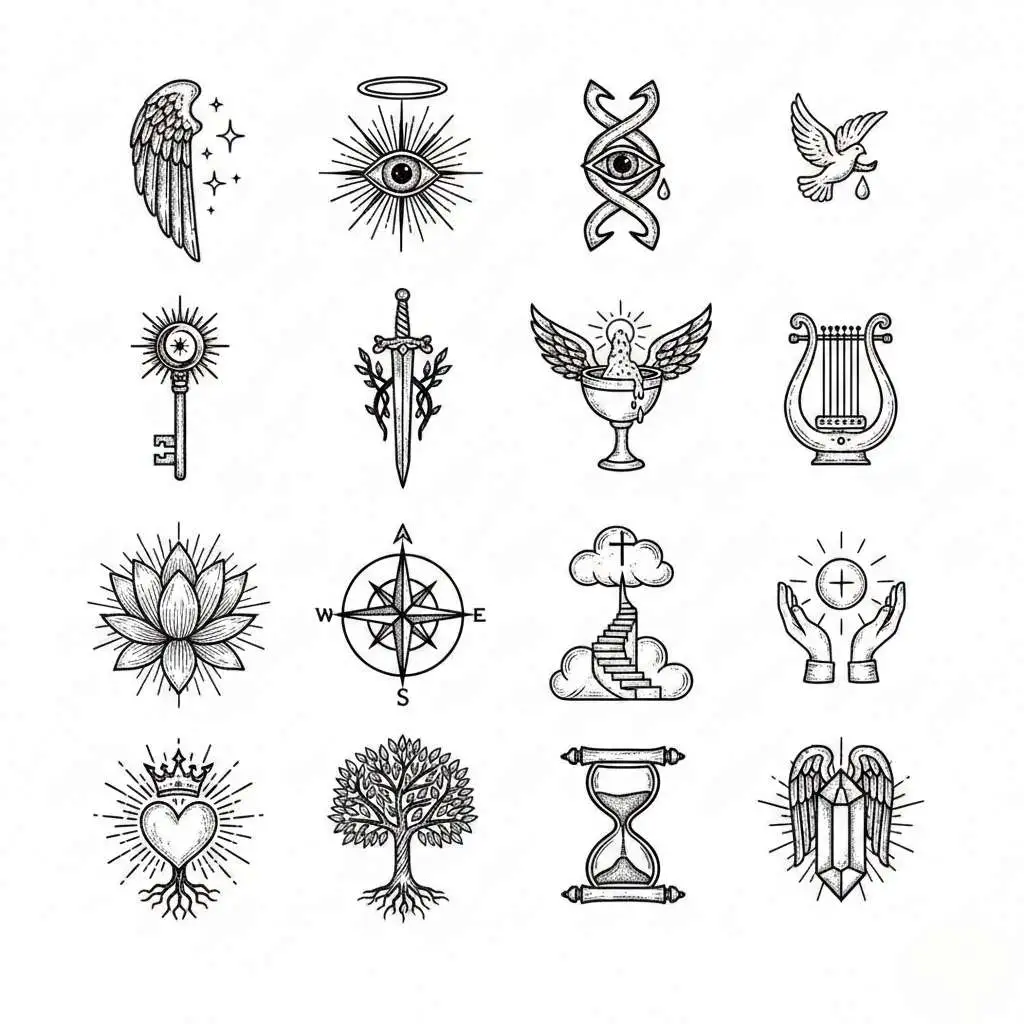
Seeing angelic symbols in dreams often reflects inner guidance or a desire for protection. Many people report feeling calm or emotionally uplifted after such dreams. During meditation or spiritual experiences, these symbols can appear as signs of alignment or reassurance during life transitions.
Positive vs Negative Meaning of Angelic Symbols
Angelic symbols often represent light, hope, and purity. Yet they can also symbolize judgment, fear, or divine authority. A trumpet can mean awakening but also final judgment. Wings can symbolize freedom or escape from pain. This duality reflects the complexity of human belief and emotion.
Why Humans Are Attracted to Angelic Symbols
Humans are drawn to angelic symbols because they promise connection beyond isolation. Psychologically, they comfort the inner child seeking safety. Emotionally, they validate suffering by suggesting purpose. Spiritually, they offer a bridge between the visible and invisible, making the unknown feel less frightening.
FAQs About Angelic Symbols
What do angelic symbols represent spiritually?
They represent guidance, protection, and divine communication.
Are angelic symbols religious or universal?
They appear across many religions and cultures, making them universal symbols.
Why do people tattoo angelic symbols?
Many use them to express faith, remembrance, or personal transformation.
Do angelic symbols appear in dreams for a reason?
Often they reflect emotional healing or a need for reassurance.
Are angel numbers considered angelic symbols?
Yes, many believe repeating numbers carry divine messages.
Can angelic symbols have dark meanings?
Some symbolize judgment or moral warning alongside protection.
Conclusion
Angelic symbols endure because they speak to something timeless within us. They offer comfort in grief, meaning in chaos, and beauty in belief.
Across centuries and cultures, these symbols remind humanity that hope often arrives quietly, shaped like wings, light or numbers that appear when least expected.

Freddie Wood
Hi! I’m Freddie Wood, a storyteller at heart and a lifelong explorer of ideas. Writing has always been my way of making sense of the world, turning ordinary moments into stories that linger in your mind. I love blending emotions with adventure, and I’m fascinated by the way words can connect people across distances and experiences. When I’m not writing, you’ll find me wandering through nature, listening to music, or sketching out ideas for my next story. My goal is always to create books that stay with readers long after the last page.
Books by Freddie Wood:
-
The Hidden Path
-
Shadows of Tomorrow