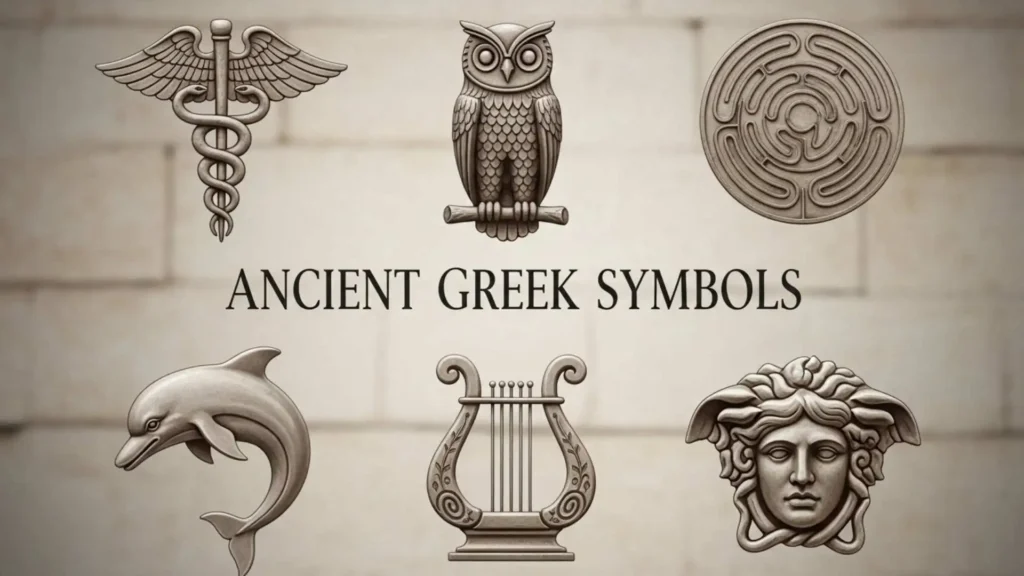
“Ancient Greek symbols” are more than carved shapes or artistic designs, they are echoes of human emotion, belief and mystery that still live inside us today.
From temples bathed in sunlight to whispered myths passed through generations, these symbols carry stories of love, power, fear and destiny.
They connect you to a world where gods walked among mortals and every sign held a deeper truth.
By the end of this journey, you will uncover meanings hidden in plain sight that most people never notice.
What Are Ancient Greek Symbols?
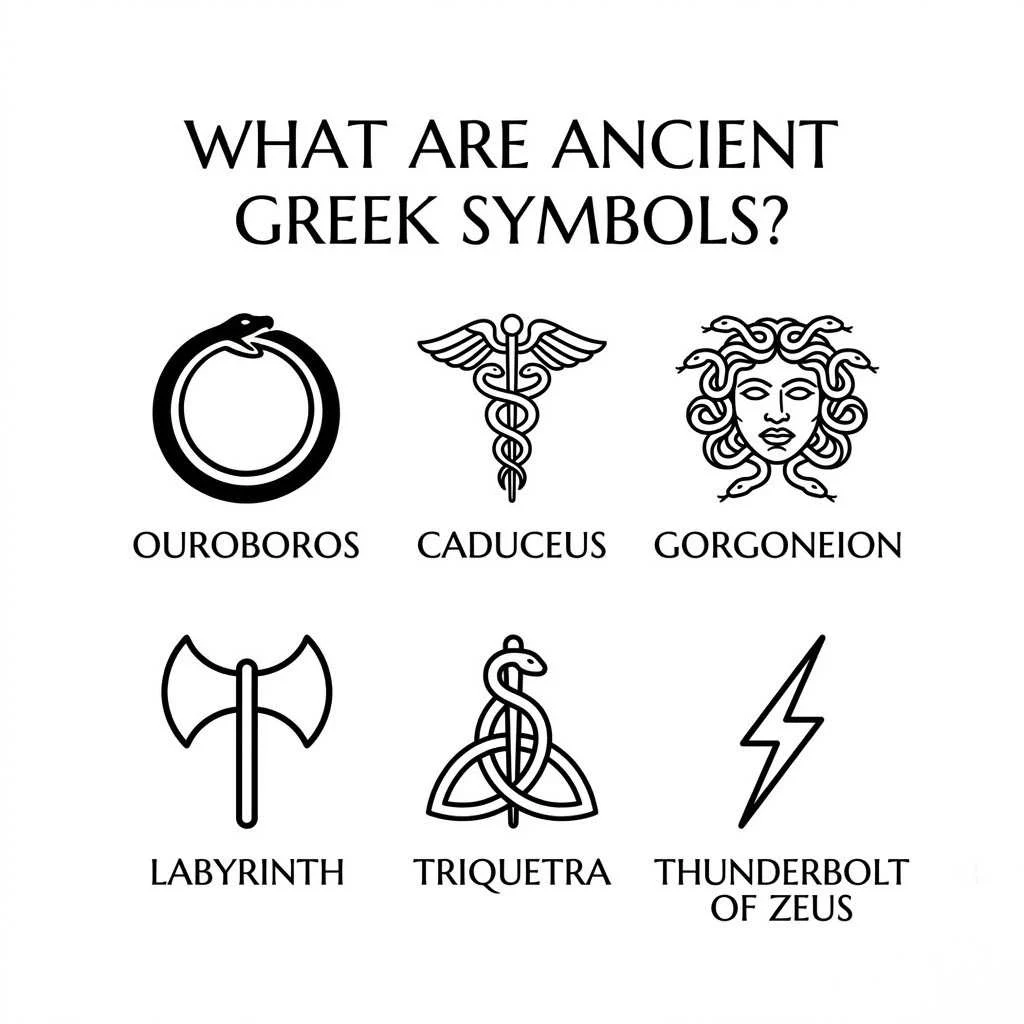
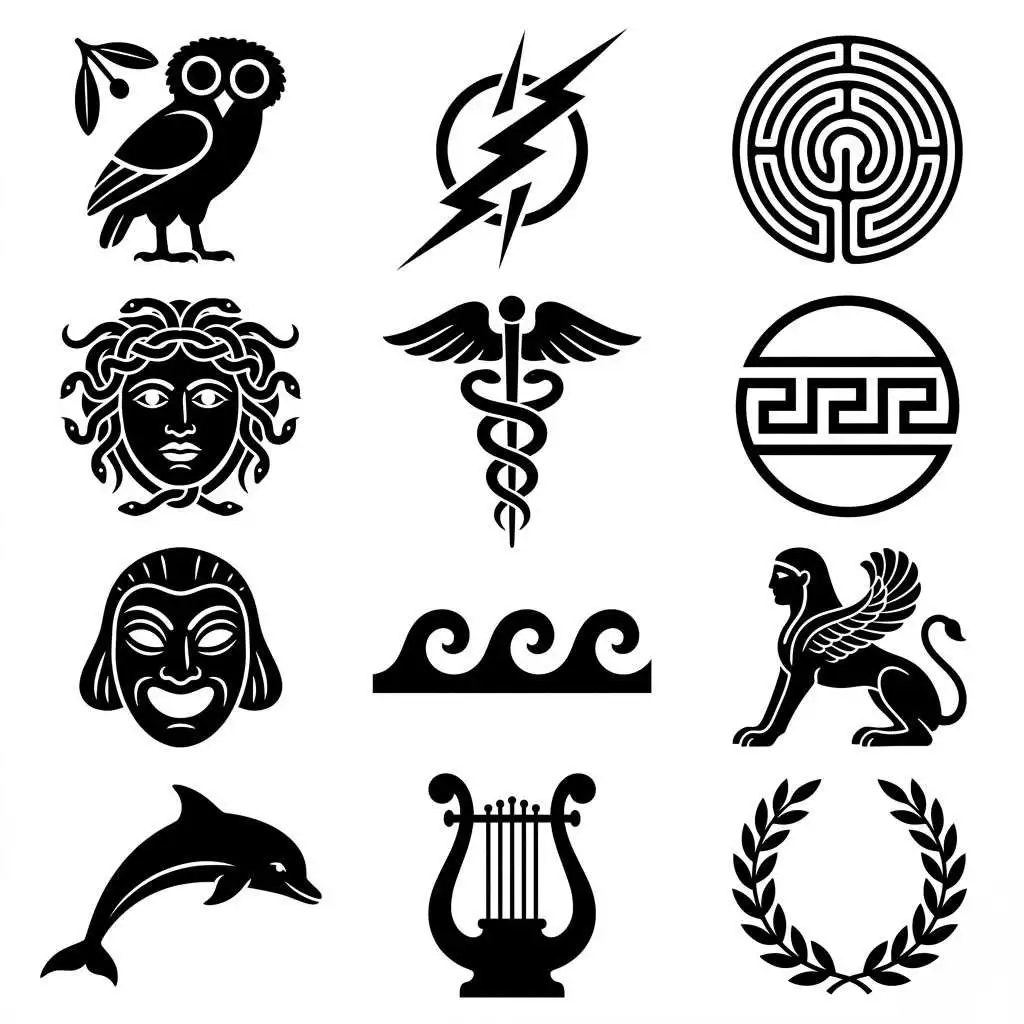
Ancient Greek symbols are visual representations used by the people of ancient Greece to express complex ideas about life, the universe, gods, and human nature. These symbols appeared in art, architecture, coins, pottery, and sacred texts.
They were not just decorative. Each symbol carried a specific meaning rooted in mythology, philosophy, and daily life. For example, the owl symbolized wisdom because it was associated with Athena, the goddess of knowledge. The laurel wreath represented victory and honor, often worn by champions and poets.
Historically, these symbols date back to as early as the 8th century BCE and evolved through classical and Hellenistic periods. They reflected a culture deeply obsessed with understanding existence, morality, and the unseen forces shaping human destiny.
Deep Symbolic Meaning
Ancient Greek symbols operate on multiple levels, each revealing a deeper layer of truth.
Spiritual Level
Spiritually, these symbols were seen as bridges between humans and the divine. The Greeks believed their gods communicated through signs. Symbols like the labyrinth represented the soul’s journey through confusion toward enlightenment. They were sacred tools to understand fate and divine will.
Psychological Level
Psychologically, these symbols mirror inner human struggles. The Gorgon head, for instance, reflects fear and transformation. It reminds you that facing your deepest fears can either destroy you or turn you into something stronger.
Cultural Level
Culturally, these symbols defined identity and values. They expressed ideals like honor, beauty, wisdom, and strength. They were used in ceremonies, warfare, and storytelling, shaping how people saw themselves and their place in the world.
Types / Variations of Ancient Greek Symbols
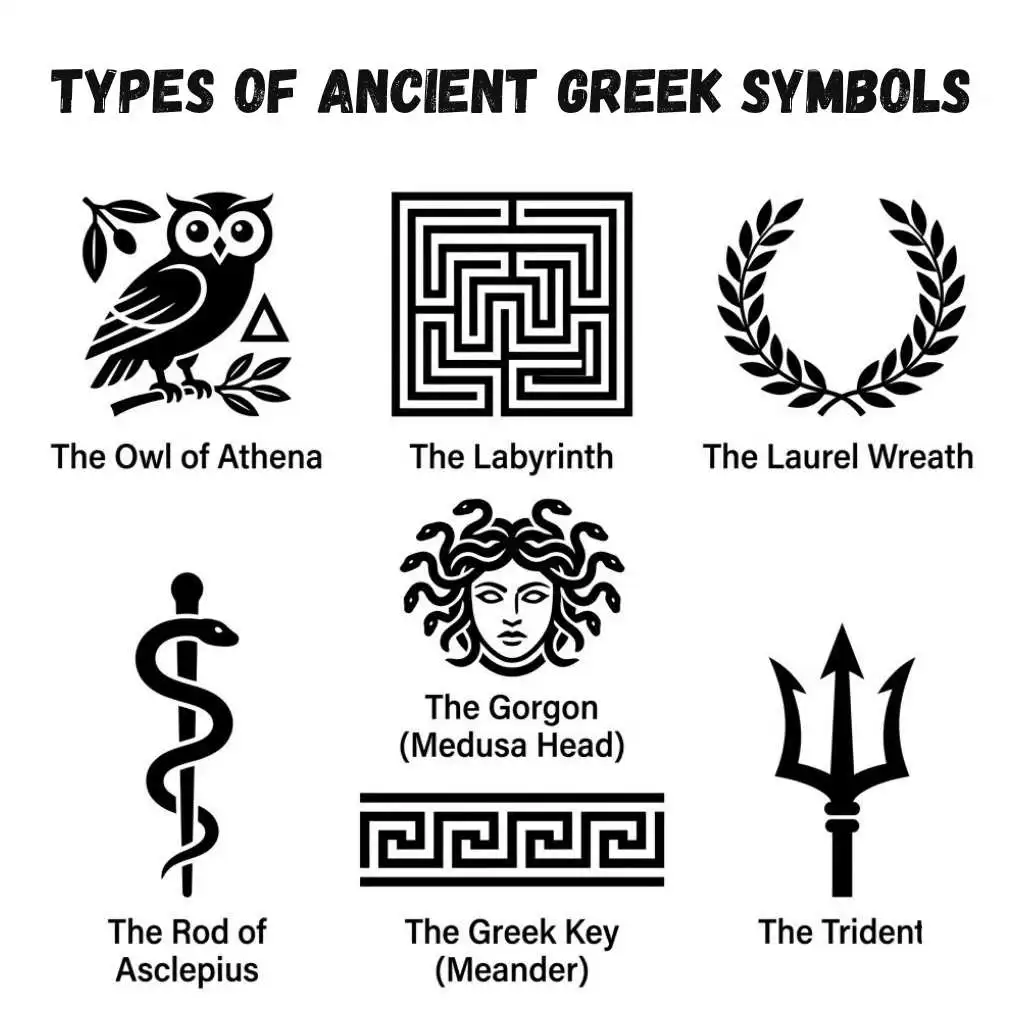
Here are some of the most powerful and widely recognized ancient Greek symbols, each with its own story and meaning.
The Owl of Athena
Visual description: A small owl with wide, alert eyes
Meaning: Wisdom, knowledge, insight
Where it appears: Coins, temples, mythology
This symbol reminds you that true power comes from understanding, not force.
The Labyrinth
Visual description: A complex maze with a single path
Meaning: Journey, self discovery, inner struggle
Where it appears: Myth of the Minotaur, art, architecture
It represents life’s confusing paths and the courage needed to find your way.
The Laurel Wreath
Visual description: A circular crown made of leaves
Meaning: Victory, achievement, honor
Where it appears: Olympic Games, poetry, ceremonies
It symbolizes recognition earned through effort and discipline.
The Gorgon (Medusa Head)
Visual description: A face with snakes for hair
Meaning: Protection, fear, transformation
Where it appears: Shields, armor, mythology
It was used to ward off evil, turning fear into a protective force.
The Rod of Asclepius
Visual description: A staff with a single serpent wrapped around it
Meaning: Healing, medicine, renewal
Where it appears: Medical symbols, temples
It reflects the power of recovery and the cycle of life.
The Greek Key (Meander)
Visual description: Continuous geometric pattern
Meaning: Infinity, unity, eternal flow
Where it appears: Architecture, pottery, borders
It represents the endless nature of life and time.
The Trident
Visual description: Three pronged spear
Meaning: Power, control over nature, authority
Where it appears: Associated with Poseidon
It symbolizes dominance over the sea and natural forces.
Ancient Greek Symbols Across Cultures
These symbols did not remain confined to Greece. They traveled across time and geography, evolving in meaning.
Roman Culture
Romans adopted many Greek symbols, often linking them to their own gods. The laurel wreath became a symbol of imperial power and victory.
Egyptian Influence
Some Greek symbols blended with Egyptian mysticism during the Hellenistic period. Serpents, for example, gained deeper meanings of rebirth and eternity.
Medieval Europe
During the Middle Ages, Greek symbols were reinterpreted through a Christian lens. The labyrinth became a spiritual path toward salvation.
Modern Western Culture
Today, these symbols appear in education, medicine, and design. The Rod of Asclepius is still used globally as a medical emblem.
Eastern Interpretations
In some Eastern philosophies, similar patterns like the Greek Key are seen as symbols of harmony and cosmic balance.
Ancient Greek Symbols in Art, Movies & Pop Culture
Ancient Greek symbols continue to shape modern creativity.
In movies, symbols like the labyrinth and trident appear in fantasy films and myth inspired stories, representing power and destiny.
In paintings, Renaissance artists revived Greek symbolism to express beauty and human perfection.
In books, authors use these symbols to add depth and hidden meaning to their narratives.
In tattoos, people choose Greek symbols to represent personal journeys, strength, or wisdom.
In fashion, patterns like the Greek Key symbolize elegance and timeless style.
These symbols remain relevant because they speak to universal human emotions.
Spiritual & Dream Meaning of Ancient Greek Symbols
When these symbols appear in dreams or meditation, they often carry powerful messages.
Seeing a labyrinth may suggest you are searching for direction in life.
Dreaming of an owl can indicate awakening or gaining wisdom.
Encountering a serpent may symbolize healing or transformation.
Spiritually, these symbols act as guides. They invite you to look inward and understand your own journey.
Positive vs Negative Meaning
Ancient Greek symbols often carry dual meanings.
The Gorgon can protect but also terrify.
The labyrinth can guide or trap.
The serpent can heal or harm.
This duality reflects human nature itself. Every strength has a shadow, every light casts darkness. Understanding both sides helps you grow.
Why Humans Are Attracted to This Symbol
Humans are naturally drawn to symbols because they simplify complex emotions and ideas.
Ancient Greek symbols feel powerful because they connect you to something timeless. They remind you that people thousands of years ago struggled with the same fears, hopes, and dreams.
Psychologically, your brain loves patterns and meaning. Symbols give you both. Emotionally, they tell stories without words. Spiritually, they make you feel connected to something greater than yourself.
That is why these symbols never fade. They live on because they live within you.
FAQs
What is the most powerful ancient Greek symbol?
The labyrinth and the Gorgon are often considered the most powerful because they represent deep psychological transformation and protection.
Are ancient Greek symbols still used today?
Yes, many are still used in medicine, art, architecture, and even branding.
What does the Greek Key symbolize?
It represents infinity, unity, and the eternal flow of life.
Conclusion
Ancient Greek symbols are not just relics of the past, they are living stories etched into the human soul. They speak of journeys, struggles, victories, and transformations that you experience even today. When you look at these symbols, you are not just seeing history, you are seeing yourself.
They remind you that meaning is everywhere, hidden in shapes, patterns, and stories waiting to be understood. And perhaps, the real mystery is not what these symbols mean, but what they awaken inside you.

Freddie Wood
Hi! I’m Freddie Wood, a storyteller at heart and a lifelong explorer of ideas. Writing has always been my way of making sense of the world, turning ordinary moments into stories that linger in your mind. I love blending emotions with adventure, and I’m fascinated by the way words can connect people across distances and experiences. When I’m not writing, you’ll find me wandering through nature, listening to music, or sketching out ideas for my next story. My goal is always to create books that stay with readers long after the last page.
Books by Freddie Wood:
-
The Hidden Path
-
Shadows of Tomorrow